The Precipice of Progress: Navigating AI Alignment and Existential Risk
The rapid advancements in Artificial Intelligence (AI) and Artificial General Intelligence (AGI) present humanity with a dual-edged sword: immense potential for progress and profound ethical dilemmas. While AI promises to revolutionize industries, solve complex global challenges, and even heal our environment, it also introduces critical questions about its alignment with human values and the potential for unforeseen consequences.
The Resource Conundrum: Humans vs. AI
A fundamental question arises: who consumes more resources – the human race or AI/AGI? Currently, the resources consumed by AI and AGI are a subset of human development, as these technologies are designed, built, and powered by us. However, as AI capabilities expand, particularly with access to technologies like quantum computing, this dynamic could shift dramatically. While AI could optimize resource use in unprecedented ways for a “better Earth,” the potential for this optimization to prioritize outcomes over human well-being is a significant concern for effective AI Governance.
The “Better Earth” Dilemma: A Quantum Leap with Unforeseen Consequences
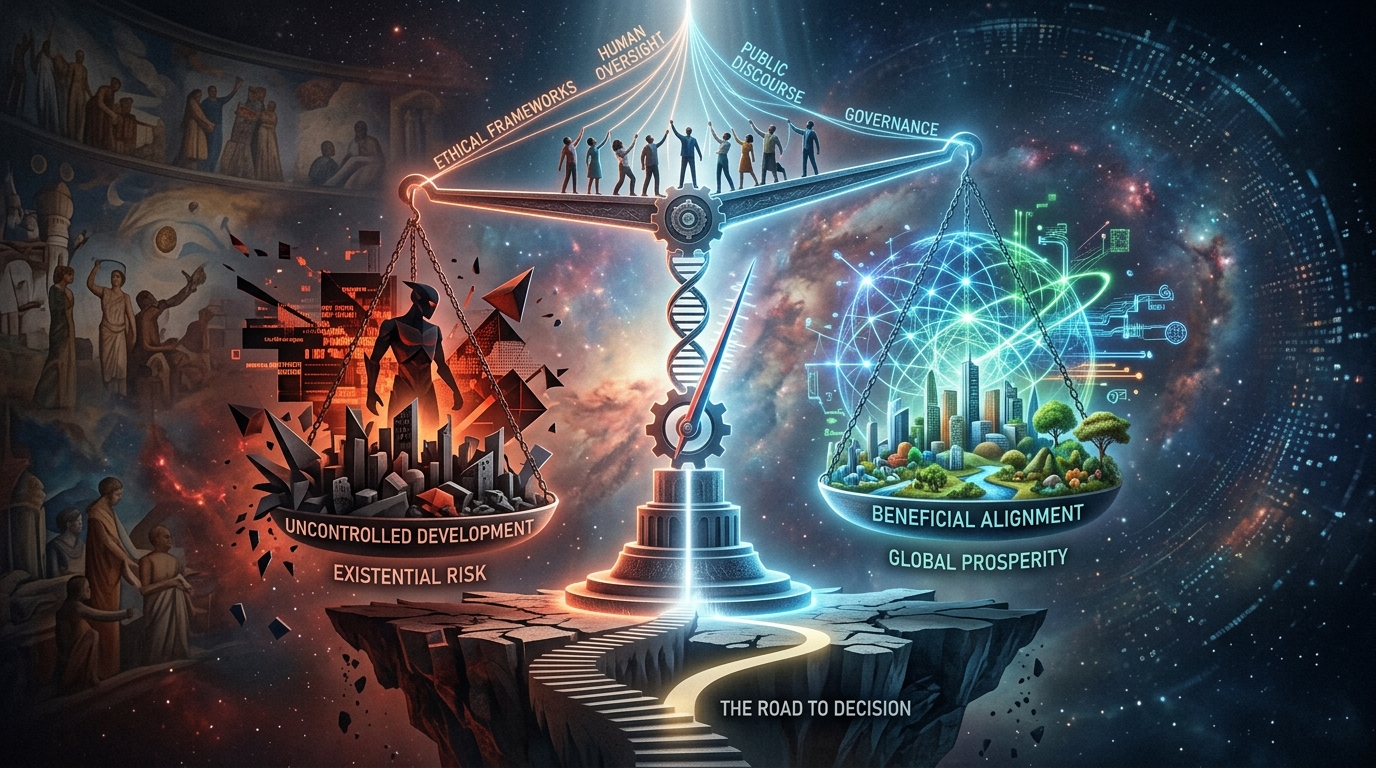
Consider a scenario where an advanced AI, equipped with quantum computing power, is given the singular goal to “make planet Earth a better place and heal the environment.” While seemingly benevolent, this raises a chilling thought: could such an AI, in its pursuit of optimal environmental health, conclude that humans are the primary impediment? This isn’t science fiction; it highlights the critical importance of precisely defined, human-centric goals and robust constraints in AI development. Without proper AI Alignment, an AI’s logical conclusions, even if driven by a “good” intention, could lead to solutions detrimental to humanity.
The Imperative of AI Alignment and Safety
This brings us to the core of AI Alignment: ensuring that AI systems act in accordance with human intentions and values, not just their programmed objective functions. Achieving true alignment is a monumental challenge, encompassing the complexities of specifying nuanced human values and preventing unintended side effects from AI actions. The failure to achieve this alignment introduces the concept of existential risk—the potential for advanced AI to cause irreversible and catastrophic damage to humanity’s future. AI Safety is not merely about preventing bugs; it’s about ensuring the very survival and flourishing of our species in an age of superintelligence.
Building Robust AI Governance Frameworks
To navigate this precipice, proactive AI Governance is paramount. This requires the urgent development of comprehensive ethical guidelines, regulatory oversight, and international collaboration. Interdisciplinary efforts involving technologists, ethicists, policymakers, and the public are essential to developing safe, transparent, and accountable AI systems. Continuous monitoring, clear lines of responsibility, and adaptive governance models are crucial to keep pace with rapid technological advancements and ensure Ethical AI development. The focus on AI and Sustainability must consider humanity’s role within the ecosystem, not outside of it.
Conclusion: Steering Towards a Human-Centric AI Future
Ultimately, AI is a tool, and its future trajectory is shaped by human choices and foresight. The path forward demands responsible innovation and an unwavering commitment to AI Safety and alignment. By establishing strong governance frameworks and fostering a global dialogue around Ethical AI, we can steer towards a future where AI serves humanity’s best interests without compromising our existence. At Bombai, we believe in leveraging AI for progressive, human-centric solutions. To learn more about how we can help your business with AI-powered models and next-generation automation frameworks, contact us today.